
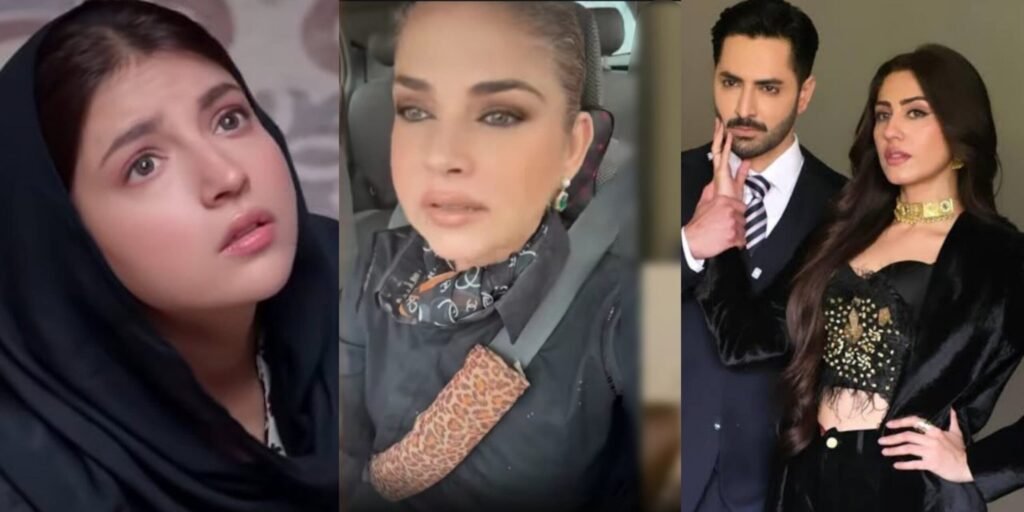
Pakistani actress and television host Mishi Khan has questioned the way female characters are portrayed in Pakistani dramas, particularly women who wear hijab. She believes that drama writers often associate hijab-wearing women with helplessness and fear while presenting women in Western outfits as confident but morally questionable.
Her recent remarks have sparked a discussion on social media about female representation, clothing stereotypes, and the responsibility of Pakistani drama writers to create more realistic characters.
Mishi Khan Questions Stereotypes in Pakistani Dramas

Mishi Khan recently shared her views on Instagram while discussing recurring themes in Pakistani television dramas. The actress expressed concern that writers frequently portray hijab-clad women as oppressed, frightened, and unable to stand up for themselves.
She also pointed out that female characters wearing Western clothes often face a different stereotype. According to her observation, these women are frequently depicted as rebellious, uncontrollable, or involved in clubbing.
Questioning this contrast, Mishi argued that drama writers should move beyond these extreme portrayals instead of connecting a woman’s clothing with her personality, confidence, or moral values.
Her comments have renewed the conversation about how Pakistani television represents women from different backgrounds and lifestyles.
Why Are Female Characters Shown in Two Extremes?
Mishi Khan’s criticism highlights an issue that regularly attracts viewers’ attention: the tendency to create female characters around predictable stereotypes.
In many drama storylines, a woman wearing hijab may be portrayed as vulnerable and dependent on others, while a woman dressed in modern Western clothing may be assigned a negative role. Such character choices can create a misleading impression that appearance determines a woman’s strength or character.
Real life, however, is far more diverse. A hijab-wearing woman can be confident, independent, ambitious, and outspoken. Similarly, a woman who prefers Western clothing can have strong moral values and a responsible personality.
More balanced storytelling can help Pakistani dramas portray women as complex individuals whose decisions, experiences, and personalities extend beyond their appearance.
Social Media Users Share Mixed Reactions
Mishi Khan’s remarks have received mixed reactions from social media users. Some viewers agree with her assessment and believe Pakistani drama writers should avoid repeatedly relying on stereotypical female characters.
Others have interpreted the issue through a cultural and religious perspective, raising concerns about how Muslim women and traditional values are represented in entertainment.
The discussion reflects a broader debate about the influence of television dramas on public perceptions of women, religious identity, and modern lifestyles.
Mishi Khan’s Career and Television Presence
Mishi Khan is a familiar face in Pakistan’s entertainment industry. She has appeared in popular television productions, including Aroosa and Boota from Toba Tek Singh, and also featured in the 2016 film Janaan.
Alongside acting, she has hosted a morning show on K2 TV for many years. She also shares videos and reviews on Instagram, where she frequently discusses Pakistani dramas and social issues.
Her latest comments have once again brought attention to the importance of thoughtful character development in Pakistani television.
Ultimately, Mishi Khan’s criticism raises an important question for drama makers: can Pakistani dramas portray hijab-wearing and modern-dressed women with equal depth, individuality, and realism rather than judging them through familiar stereotypes?
Source: Reviewit.pk