
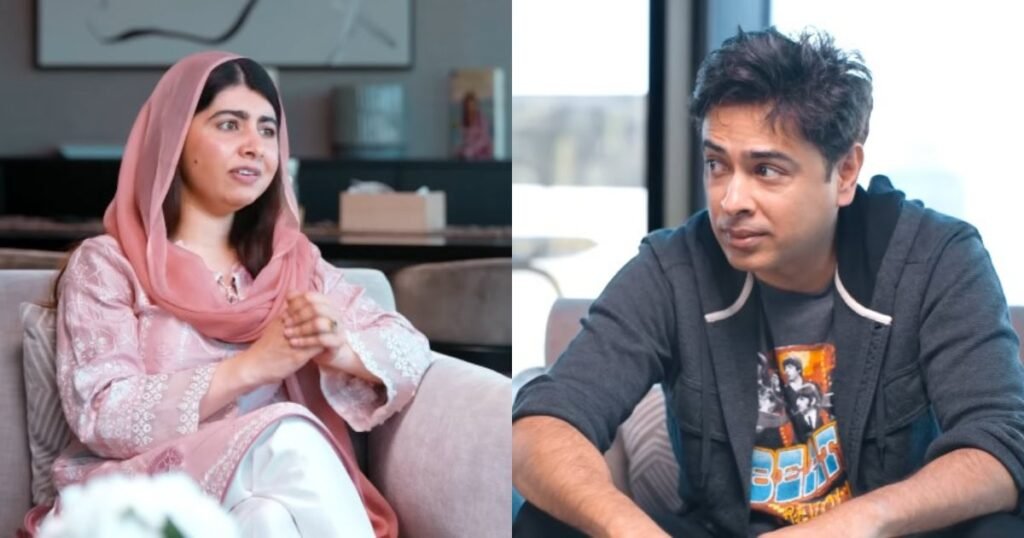
A recent conversation between singer-activist Shehzad Roy and Nobel laureate Malala Yousafzai has ignited a fresh debate on social media. The discussion, centered around global humanitarian issues, particularly Gaza, has captured public attention and triggered mixed reactions in Pakistan.
Shehzad Roy: A Voice for Social Change
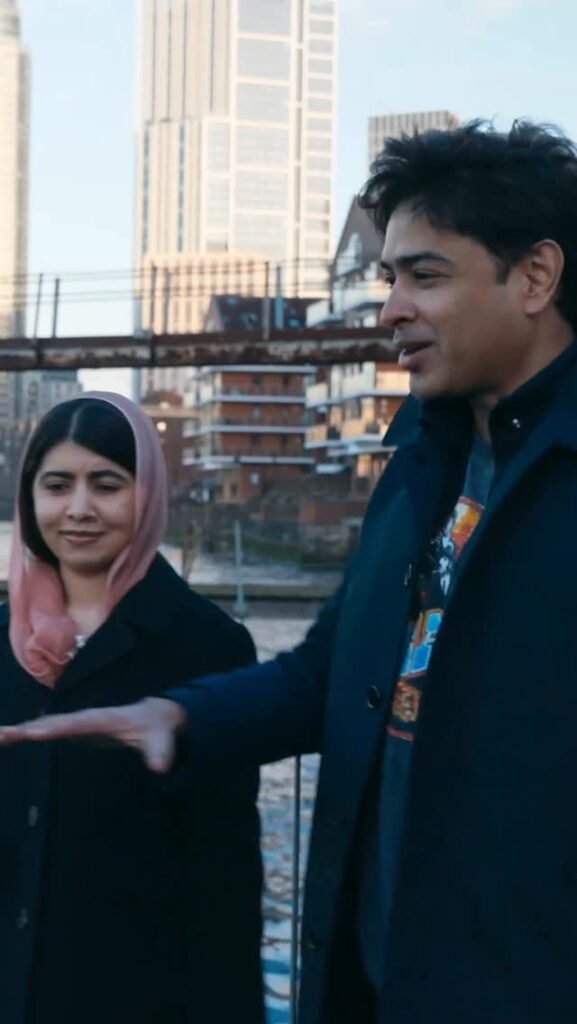
Shehzad Roy is widely respected not just for his music but for his long-standing contributions to education reform in Pakistan. Through his activism, he has consistently raised awareness about systemic issues and has never hesitated to question powerful narratives.
During his recent interaction with Malala, Shehzad maintained his signature candid style—mixing humor with serious questions. In a light-hearted moment, he even referred to Malala as his “favorite agent,” adding a touch of wit to the conversation.
Malala Yousafzai: Global Icon Under Scrutiny
Malala Yousafzai remains one of Pakistan’s most recognized global figures. As a Nobel Peace Prize winner, she has championed girls’ education worldwide. However, her public statements often attract both praise and criticism, making her a polarizing personality in public discourse.
In the interview, Malala addressed ongoing criticism regarding her alleged silence on the Gaza situation—a topic that has been trending across global media and social platforms.
The Gaza Question: What Was Said?
Shehzad Roy directly questioned Malala about why she appeared silent during critical moments related to Gaza. This question reflects a broader public sentiment, as many online users have previously raised similar concerns.
Responding to the criticism, Malala clarified that she was not silent. She explained that she had publicly condemned the violence through social media and also used symbolic gestures—such as wearing a pin at a high-profile event—to highlight the issue.
She further emphasized that misinformation often spreads quickly, and people sometimes form opinions without verifying facts.
Malala Responds to Criticism
Malala strongly rejected the narrative that she ignored the situation. She stated that she had consistently spoken out against violence, including raising her voice for innocent children affected by attacks in conflict zones.
She also highlighted that her advocacy extends beyond one region, focusing on the broader humanitarian crisis affecting young girls globally. According to her, selective criticism often overlooks her ongoing efforts.
Public Reaction: Divided Opinions
The interview has sparked a wave of reactions across Pakistan:
- Some praised Shehzad Roy for asking a bold and relevant question
- Others defended Malala, agreeing with her stance on misinformation
- A section of users criticized global figures for delayed responses on sensitive issues
This divide reflects the complexity of public expectations from influential personalities, especially when it comes to global conflicts.
Social Media and Narrative Building
The controversy also highlights the role of digital platforms in shaping narratives. In today’s fast-paced media environment, public figures are expected to respond instantly, and any delay can lead to criticism.
At the same time, this situation shows how easily incomplete information can influence public perception, making fact-checking more important than ever.
Final Thoughts
The conversation between Shehzad Roy and Malala Yousafzai has opened up an important dialogue about accountability, activism, and public expectations. While opinions remain divided, the discussion itself reflects a growing awareness among Pakistanis about global humanitarian issues.
As debates continue, one thing is clear—voices like Shehzad Roy and Malala Yousafzai will keep shaping conversations that matter, both in Pakistan and beyond. The source of this news is Reviewit.